
Last updated: 2026-10-11
Pennsylvania Electricians is an independent contractor-referral service that connects Pennsylvania homeowners, landlords, and property managers with participating independent electricians. This page covers electrical panel upgrades: the signs a panel is outdated or undersized, what an upgrade involves, the permit and utility steps in Pennsylvania, and what drives the price.
What an electrical panel upgrade is
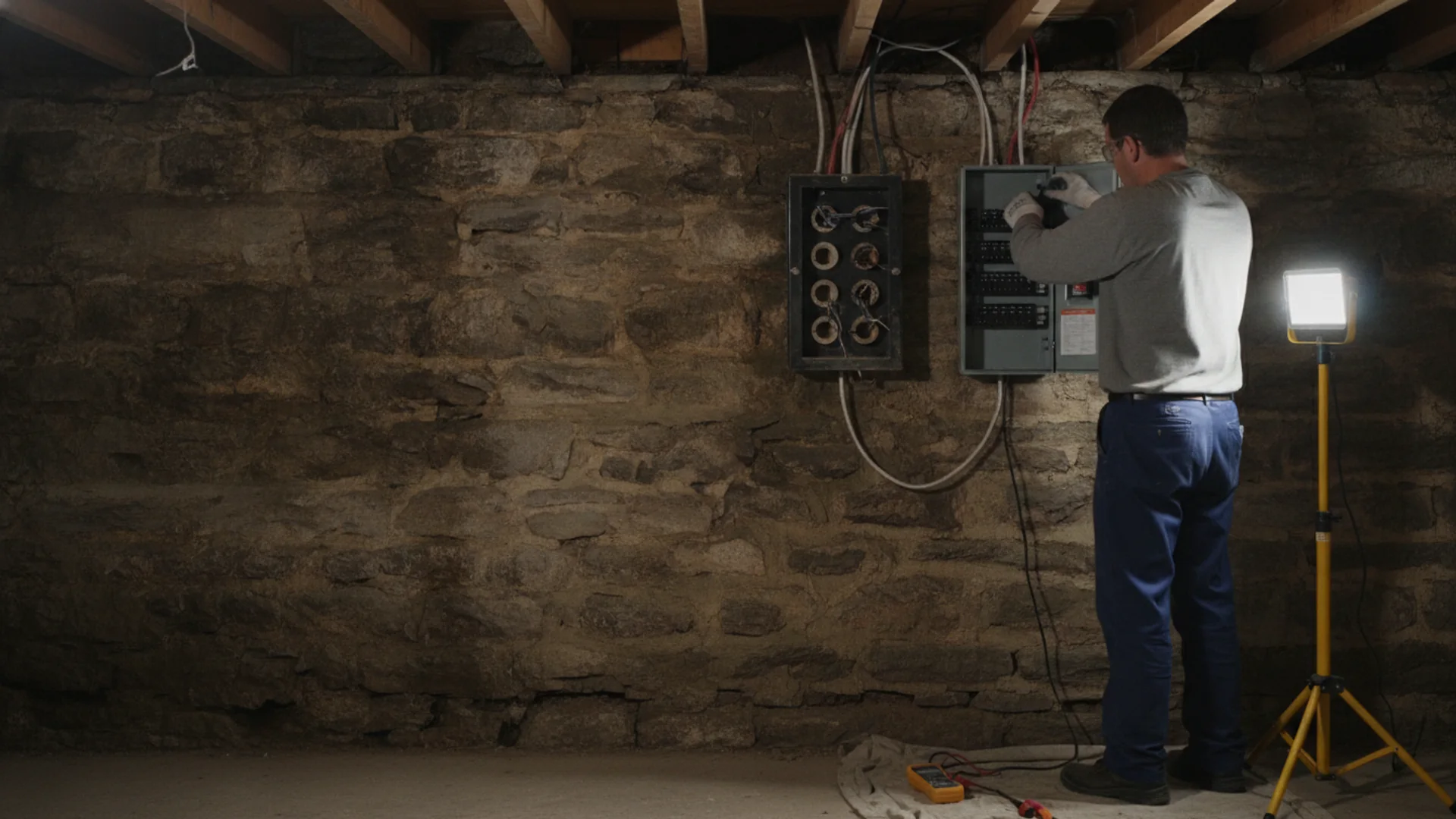
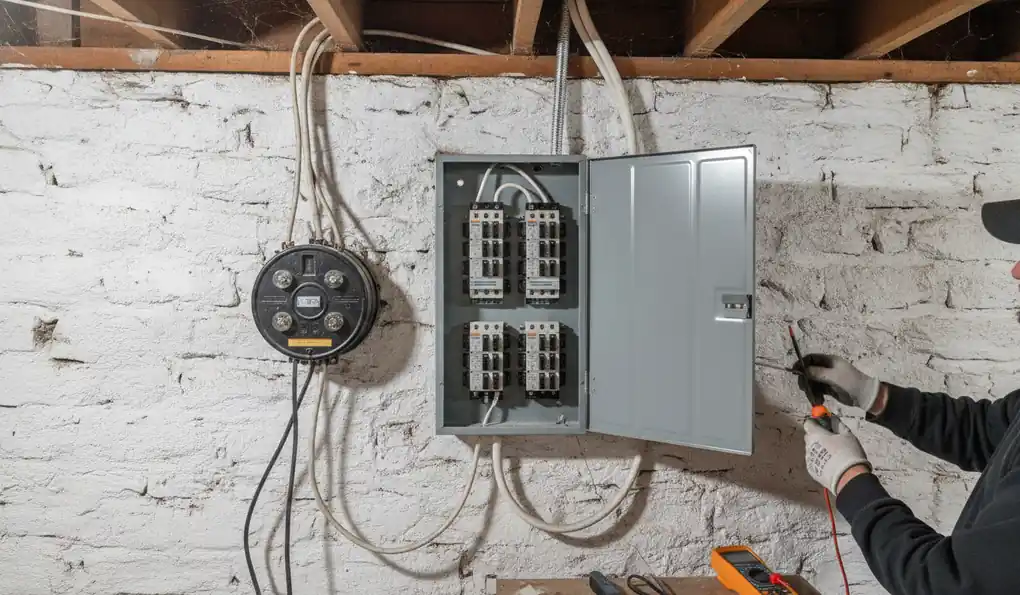
Your panel (also called a breaker box, load center, or, in older houses, a fuse box) takes power from the utility meter and splits it into the circuits that run the house. A panel upgrade usually means one of three jobs: replacing an old or failing panel with a new one of the same size, replacing a fuse box with a breaker panel, or a service upgrade that raises the home's capacity, most often from 60 or 100 amps to 200 amps. A service upgrade often includes a new meter base and service entrance cable, which is why it involves the utility.
If the issue is a single breaker that trips or won't reset, that's usually a smaller job; see circuit breaker repair.
Signs your panel may need an upgrade
None of these proves a panel has to be replaced, and only an electrician's inspection can tell. They are the common reasons homeowners end up asking:
- You still have fuses. Screw-in or cartridge fuses, especially if fuses blow often or someone has installed larger fuses than the wiring is rated for.
- 60- or 100-amp service in a house that now has central air, an electric range or dryer, a heat pump, a hot tub, or a planned EV charger.
- Breakers that trip often across several circuits, not just one overloaded outlet.
- No empty spaces left for new circuits, or lots of tandem ("double-stuffed") breakers.
- Heat, buzzing, crackling, rust, or scorch marks at the panel. Treat heat, scorching, or a burning smell as urgent.
- A panel brand inspectors commonly flag, such as Federal Pacific Electric (Stab-Lok) or Zinsco.
- A home inspection, insurer, or renovation that calls for it. Major remodels and additions often trigger a load calculation that shows the existing service is too small.
- Lights dim across the house when large appliances start.
Why it comes up so often in Pennsylvania
Pennsylvania's older cities have some of the oldest housing in the country. According to the U.S. Census Bureau's 2020–2024 American Community Survey, 57 percent of homes in Reading, 54 percent in Lancaster, and 49 percent in York were built before 1940. Many were wired for a few lights and outlets, then added to over decades. That's how a rowhome ends up with a fuse box, a small subpanel added in the 1960s, and a kitchen full of modern appliances on circuits that were never planned for them. See Reading, Lancaster, and York for local details.
Electrification adds to it. A Level 2 EV charger needs its own 240-volt circuit, and heat pumps, induction ranges, and heat pump water heaters all add load. The electrician should do a load calculation before recommending a service size, so you're not paying for 400 amps you don't need or installing a 200-amp panel that's already full.
Permits, inspections, and the utility
Panel replacements and service upgrades are permitted work under the Pennsylvania Uniform Construction Code, which moved to the 2021 International Codes on January 1, 2026. The permit goes through your municipality, and the inspection is done by its code office or the third-party inspection agency it uses. Ask who will pull the permit; it is normally the contractor.
A service upgrade also needs the utility, because the meter has to be pulled and the service reconnected. In York, for example, the city's permit office says you must have a Met-Ed "DR" number before requesting the electrical inspection that lets the utility turn power back on. Lancaster, Harrisburg, and Allentown are served by PPL. The electrician normally coordinates this, and the power is off for part of the job.
Never pull a meter yourself or work inside a panel: the service conductors feeding the main breaker stay energized even when the main breaker is off.
When to call an electrician about your panel
- The panel or a breaker is hot to the touch, buzzing, crackling, or smells burnt. If there's smoke or sparking, leave and call 911.
- Fuses blow or breakers trip regularly, on more than one circuit
- You're adding central air, an EV charger, a heat pump, an electric range, a hot tub, or finishing a basement
- Your home inspector or insurer has flagged the panel, the service size, or the brand
- There's rust, water staining, or corrosion inside or on the panel, or it was in a flooded basement
- Your house still has a fuse box or 60-amp service and you're planning any electrical work
What a panel upgrade costs
HomeAdvisor's June 2026 figures put the average panel replacement at $1,347, with most homeowners paying $518 to $2,193 (HomeAdvisor). By size, it lists 100-amp panels at $800 to $1,500, 150-amp at $1,300 to $1,600, 200-amp at $1,300 to $2,000, and 400-amp at $2,000 to $4,000. Replacing a fuse box with a breaker panel runs $1,500 to $2,000, or up to $4,500 when wiring has to be overhauled, and replacing a Federal Pacific or Zinsco panel runs $1,500 to $4,000. Moving a panel costs $1,500 to $4,000. These are national ranges, not quotes; see our Pennsylvania electrician cost guide.
Tax credits changed recently. The federal 25C credit that covered up to $600 for a qualifying panel upgrade ended for work placed in service after December 31, 2025, so don't count on it for a 2026 project. Ask your utility about any current programs.
- Panel size and whether the meter base and service entrance cable must be replaced too
- Fuse box replacement versus a like-for-like panel swap
- How many circuits move over, and whether old wiring needs repair to meet current code
- AFCI and GFCI breakers required on the new panel
- Moving the panel (some old locations no longer meet clearance rules)
- Permit and inspection fees, and drywall or plaster repair
How to prepare for a panel upgrade
- Write down what you want to add in the next few years (EV charger, heat pump, generator, finished basement) so the electrician sizes the service once.
- Get the scope in writing, including amperage, the panel make, whether the meter base is included, AFCI and GFCI breakers, permit, and patching.
- Plan for the outage. Power is usually off for part of the day; ask how long and arrange refrigerated medicine, medical equipment, and remote work around it.
- Clear the area around the panel and the outside meter.
- Keep the paperwork: the permit, the final inspection, and the new panel directory. You'll want them when you sell or insure the house.
Questions to ask before a panel upgrade
- Did you do a load calculation, and what service size do you recommend and why?
- Does your price include the meter base, service entrance cable, and grounding updates?
- Who pulls the permit, and who schedules the inspection and the utility disconnect?
- Pennsylvania has no statewide electrician license. Does my municipality require one, and what's your license number if so? What's your PAHIC registration number?
- Which circuits will get AFCI or GFCI protection, and will any old wiring need repair?
- How long will the power be off?
- Is the price in writing, and what's excluded (drywall, plaster, painting)?