
Cost Guide
How much does an electrician cost in Pennsylvania?
Typical electrician costs in Pennsylvania: hourly rates, service calls, common repairs, panel upgrades, and rewiring, with what drives the price in older PA homes.
Most electrician jobs cost $163 to $538, averaging $351, according to Angi's 2026 data, with hourly rates of $50 to $130 and a $100 to $200 first-hour service call. Pennsylvania electricians earn about 6 percent more than the national average (BLS), so expect PA prices at or a little above national ranges.
Published 2026-10-11 · Updated 2026-10-11
The short version
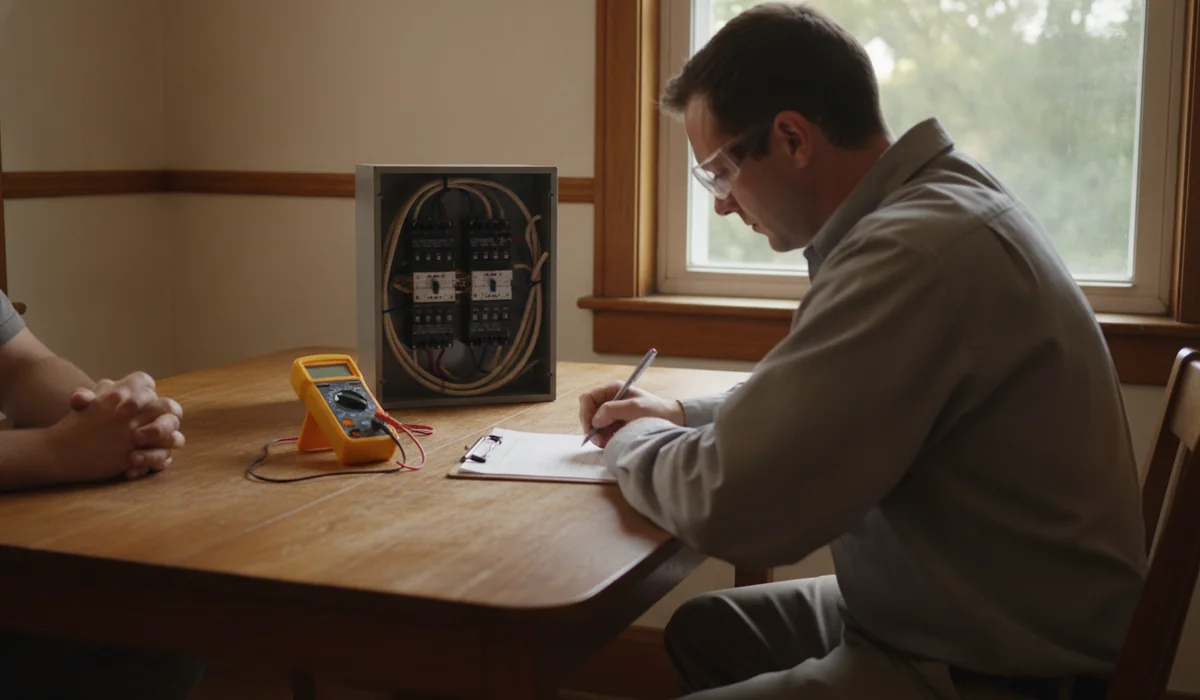
There’s no Pennsylvania-specific survey of what electricians charge homeowners, so published national data is the best starting point. Angi’s 2026 data puts the average electrician job at $351, with most falling between $163 and $538. Hourly rates run $50 to $130, and most electricians charge a service-call or first-hour fee of $100 to $200. The closest Pennsylvania benchmark Angi publishes is Philadelphia, where the average job is $377 and hourly rates run $54 to $108.
Bigger projects are priced by the job, not the hour. A 200-amp panel runs $1,300 to $2,000 and rewiring a 1,500-square-foot house $3,000 to $6,000, before wall repair.
How Pennsylvania compares: electrician wages by metro
Wages aren’t prices, but they show whether a market runs above or below national figures. The U.S. Bureau of Labor Statistics’ May 2025 Occupational Employment and Wage Statistics put the mean hourly wage for electricians at:
| Area | Mean hourly wage (May 2025) |
|---|---|
| United States | $34.37 |
| Pennsylvania | $36.43 |
| Reading metro | $36.81 |
| Harrisburg–Carlisle metro | $36.20 |
| Allentown–Bethlehem–Easton metro | $35.97 |
| York–Hanover metro | $35.13 |
| Lancaster metro | $34.93 |
Source: BLS OEWS, electricians (47-2111). Pennsylvania’s electrician wages run about 6 percent above the national mean, and all five of the metros we cover sit above it too. What you’re billed is far higher than the wage, because the contractor’s rate also covers insurance, a vehicle, tools, permits, licensing where required, and office overhead. The takeaway: plan on national price ranges as a floor rather than a ceiling.
Typical costs for common jobs
National ranges from Angi (2026), next to Angi’s figures for Philadelphia, the nearest Pennsylvania city with published figures:
| Job | National range | Philadelphia |
|---|---|---|
| Outlet | $200 – $300 | $215 – $323 |
| Light switch | $85 – $200 | $92 – $215 |
| Ceiling fan | $140 – $350 | $151 – $377 |
| Light fixtures | $150 – $6,000 | $162 – $6,462 |
| Breaker box | $500 – $1,800 | $539 – $1,939 |
| Generator transfer switch | $200 – $400 | $215 – $431 |
| Home electrical inspection | $280 – $400 | $302 – $431 |
| Rewiring a house | $1,500 – $10,000 | $1,616 – $10,770 |
| Moving an electrical panel | $1,500 – $4,000 | — |
These are published ranges, not quotes. A participating electrician will quote your job after seeing it.
Panel upgrade costs
HomeAdvisor’s June 2026 figures put the average panel replacement at $1,347, with most homeowners paying $518 to $2,193:
| Service size | Typical range |
|---|---|
| 100 amp | $800 – $1,500 |
| 150 amp | $1,300 – $1,600 |
| 200 amp | $1,300 – $2,000 |
| 400 amp | $2,000 – $4,000 |
| Fuse box to breaker panel | $1,500 – $2,000 (up to $4,500 with wiring work) |
| Federal Pacific or Zinsco replacement | $1,500 – $4,000 |
A full service upgrade that replaces the meter base and service entrance cable adds to these, and so do permit fees and wall repair. The federal 25C tax credit, which covered up to $600 for a qualifying panel, ended for work placed in service after December 31, 2025. See electrical panel upgrades for what the job involves.
Rewiring costs
Angi puts whole-house rewiring at about $2 to $4 per square foot for materials and labor:
| Home size | Typical range |
|---|---|
| 1,000 sq ft | $2,000 – $4,000 |
| 1,500 sq ft | $3,000 – $6,000 |
| 2,000 sq ft | $4,000 – $8,000 |
| 2,500 sq ft | $5,000 – $10,000 |
Opening and repairing walls adds roughly $4 to $8 per square foot of wall, according to the same source, and plaster costs more to patch than drywall. That’s why rewiring a pre-1940 Pennsylvania rowhome often costs more than the per-square-foot figure suggests. Read when to rewire an older home.
What drives the price in Pennsylvania homes
- House age and walls. Plaster and lath, brick party walls, and balloon framing slow down fishing new wire. In Reading, 57 percent of homes were built before 1940; in Lancaster, 54 percent; in York, 49 percent (U.S. Census Bureau, ACS 2020–2024).
- What’s found once work starts. Knob-and-tube, cloth-insulated wire, ungrounded circuits, and old DIY splices often have to be fixed before new work can be connected.
- Permits and inspections. Panel, service, and new-circuit work is permitted under the Pennsylvania Uniform Construction Code. Angi puts a typical permit at $75 to $150, and $200 to $900 for rewiring an older home; your municipality sets the actual fee.
- Utility coordination. Service upgrades need Met-Ed, PPL, or your local utility to disconnect and reconnect the meter, which affects scheduling.
- Timing. Angi reports emergency and after-hours calls often cost about double the normal hourly rate.
- Access. Finished basements, crawl spaces, and attics with insulation add time.
How to compare quotes
- Get the scope in writing. Pennsylvania’s Home Improvement Consumer Protection Act requires a written contract for home improvement work over $500, and you have three business days to cancel after signing.
- Compare the same job. Check that every quote includes the same amperage, AFCI and GFCI protection, the permit, and patching.
- Ask for the PAHIC number. Contractors who do $5,000 or more of home improvement work a year must register with the Pennsylvania Attorney General and show the number on contracts and estimates.
- Ask about local licensing. Pennsylvania has no statewide electrician license, but cities including Allentown, Reading, and Harrisburg license electricians. See questions to ask before hiring an electrician.
- Be wary of a price that skips the permit. Unpermitted panel or service work can cause problems with inspections, insurance, and selling the house.
Local pages: York, Lancaster, Reading, Harrisburg, Allentown, and Hanover.
The bottom line
If you need an electrician now, call (717) 409-6059 and we'll try to connect you with a participating independent electrician who serves your area. That electrician diagnoses the problem and quotes the job themselves. If anything is smoking, sparking, or smells like it's burning, leave and call 911 first.