
Last updated: 2026-10-11
Pennsylvania Electricians is an independent contractor-referral service that connects Pennsylvania homeowners, landlords, and property managers with participating independent electricians. This page covers house rewiring and wiring repair: the older wiring types found in Pennsylvania homes, the problems with each, when to rewire part or all of a house, and what drives the cost.
Older wiring types in Pennsylvania homes
Pennsylvania has some of the oldest housing in the country. In Reading, 57 percent of homes were built before 1940, in Lancaster 54 percent, in York 49 percent, and in Harrisburg 43 percent (U.S. Census Bureau, ACS 2020–2024). Most have been partly updated, so one house can have several generations of wiring:
- Knob-and-tube (common before about 1940): individual wires on porcelain knobs and through porcelain tubes. It has no ground, the cloth-and-rubber insulation becomes brittle, and it's designed to shed heat into open air, so it shouldn't be buried in insulation.
- Cloth-sheathed cable (roughly the 1930s through 1960s): often ungrounded, with insulation that cracks when disturbed.
- Aluminum branch wiring (some homes wired from 1965 to the mid-1970s): CPSC research found these homes were 55 times more likely to have a connection reach "fire hazard conditions" than copper-wired homes.
- Ungrounded circuits behind two-prong outlets, and later additions spliced into older wiring without boxes.
Signs your wiring needs attention
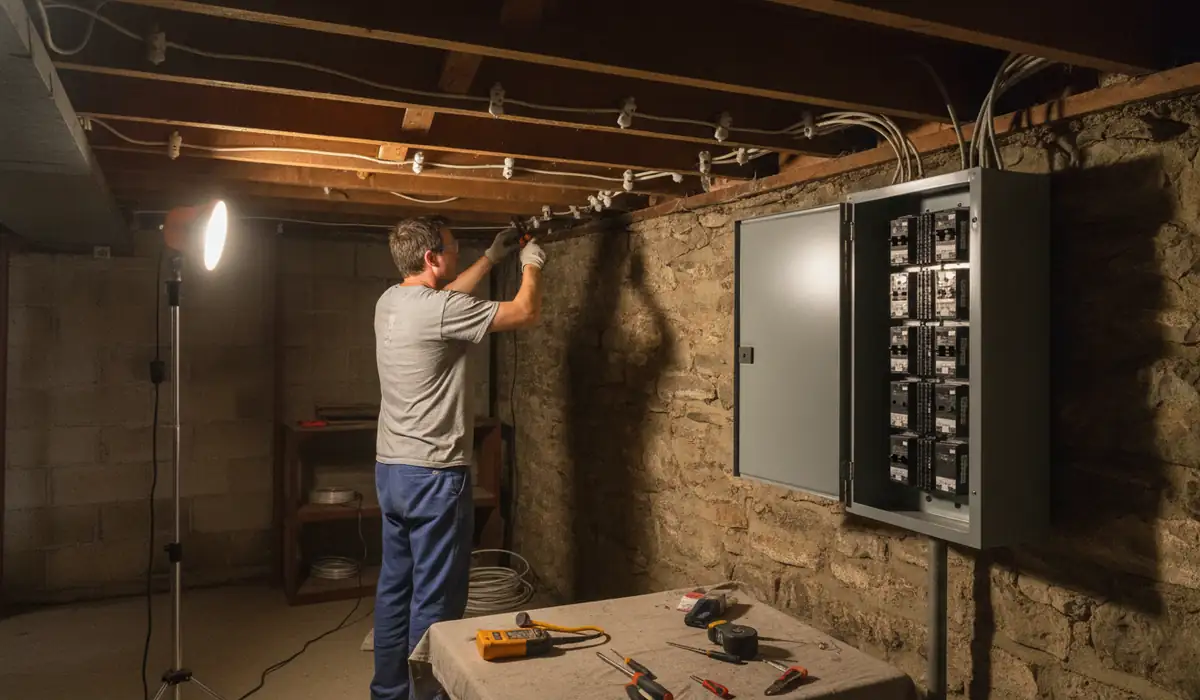
- Cloth-covered wire or porcelain knobs visible in the basement or attic
- Two-prong outlets throughout the house
- Outlets, switches, or cover plates that are warm or discolored
- Lights that flicker or dim; frequent trips or blown fuses
- A burning-plastic smell at outlets (CPSC lists this as a warning sign with aluminum wiring)
- Brittle, cracked, or chewed insulation where wiring is visible
- A home inspector, insurer, or lender that has flagged the wiring
Partial or full rewire?
Rewiring doesn't have to be all at once. Many Pennsylvania homeowners rewire in stages: the kitchen and bathrooms during a remodel, then bedrooms, with the panel and service upgraded first so new circuits have somewhere to go. An electrician can tell you which circuits are still on original wiring and which matter most.
A full rewire usually makes sense when most of the house is still on knob-and-tube or brittle cloth wiring, when walls are already open for a renovation, or when an insurer requires it. For aluminum branch wiring, CPSC lists permanent repairs: rewiring with copper, or attaching copper "pigtails" with connectors designed for the purpose (such as COPALUM crimps or AlumiConn connectors) at every connection. Ordinary twist-on connectors aren't a fix.
Plaster, permits, and insurance
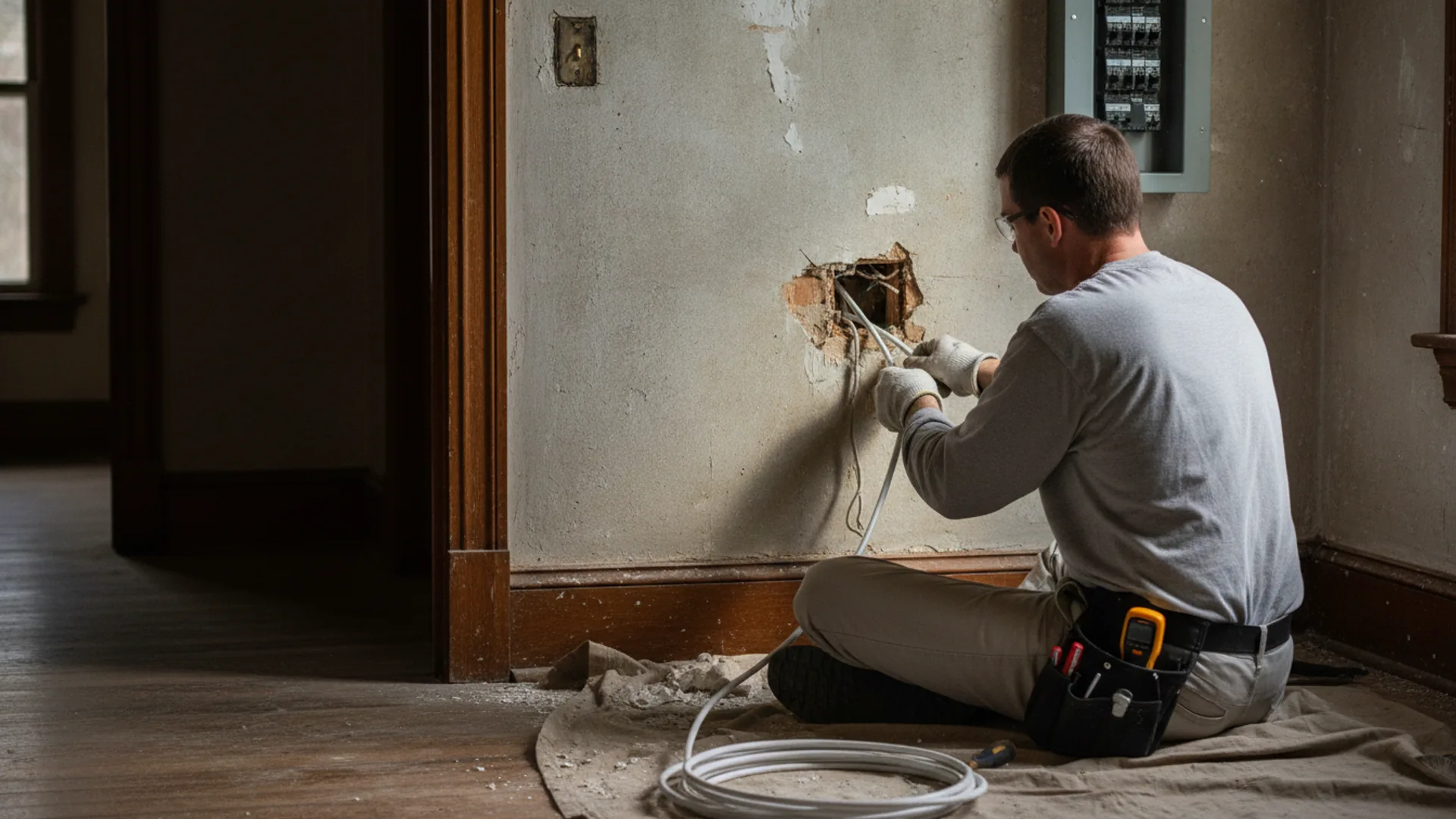
Fishing new cable through plaster walls is slower than drywall, and patching plaster costs more, so ask who handles patching. Rewiring is permitted work under the Pennsylvania Uniform Construction Code; the permit and inspection run through your municipality. Some insurers ask about or limit coverage for homes with active knob-and-tube or aluminum wiring, so it's worth asking your insurer before you buy or renovate. See when to rewire an older home.
When to call an electrician about wiring
- You've found knob-and-tube, cloth-insulated, or aluminum branch wiring
- You're about to open walls for a renovation or add insulation in walls or the attic
- Outlets or switches are warm, discolored, or smell like burning plastic
- Your insurer, lender, or home inspector has flagged the wiring
- You're buying an older home and want to know what you're getting
- There's damage from rodents, water, or past DIY work
What rewiring costs
Angi puts whole-house rewiring at about $2 to $4 per square foot for materials and labor: $3,000 to $6,000 for a 1,500-square-foot home and $4,000 to $8,000 for 2,000 square feet. Opening and repairing walls adds about $4 to $8 per square foot of wall, and plaster costs more to patch than drywall. Older homes often need a panel upgrade at the same time. See the Pennsylvania cost guide.
- Square footage and number of floors
- Plaster and lath versus drywall, and access from the basement and attic
- Partial versus full rewire
- Panel or service upgrade at the same time
- Permits and inspections
- Wall and ceiling patching and painting
How to plan a rewire
- Get the wiring assessed before deciding: what's original, what's been updated, and what's in use.
- Rewire before you renovate or insulate; it's cheaper when walls are open.
- Upgrade the panel first if the service is 60 or 100 amps and you're adding load.
- Ask your insurer what they require.
- Plan for patching: who does it, and whether it's in the price.
Questions to ask about rewiring
- How much of the house is still on original wiring, and is any of it knob-and-tube or aluminum?
- Can this be done in phases, and in what order?
- How will you route new cable through plaster walls, and who patches?
- Does the price include the permit, inspection, and any panel work?
- Pennsylvania has no statewide electrician license. Does my municipality require one for this work, and what's your license number if so? What's your PAHIC registration number?