Skip to content

Independent referral service: calls connect you with participating Pennsylvania electricians. How it works

Pennsylvania Electricians
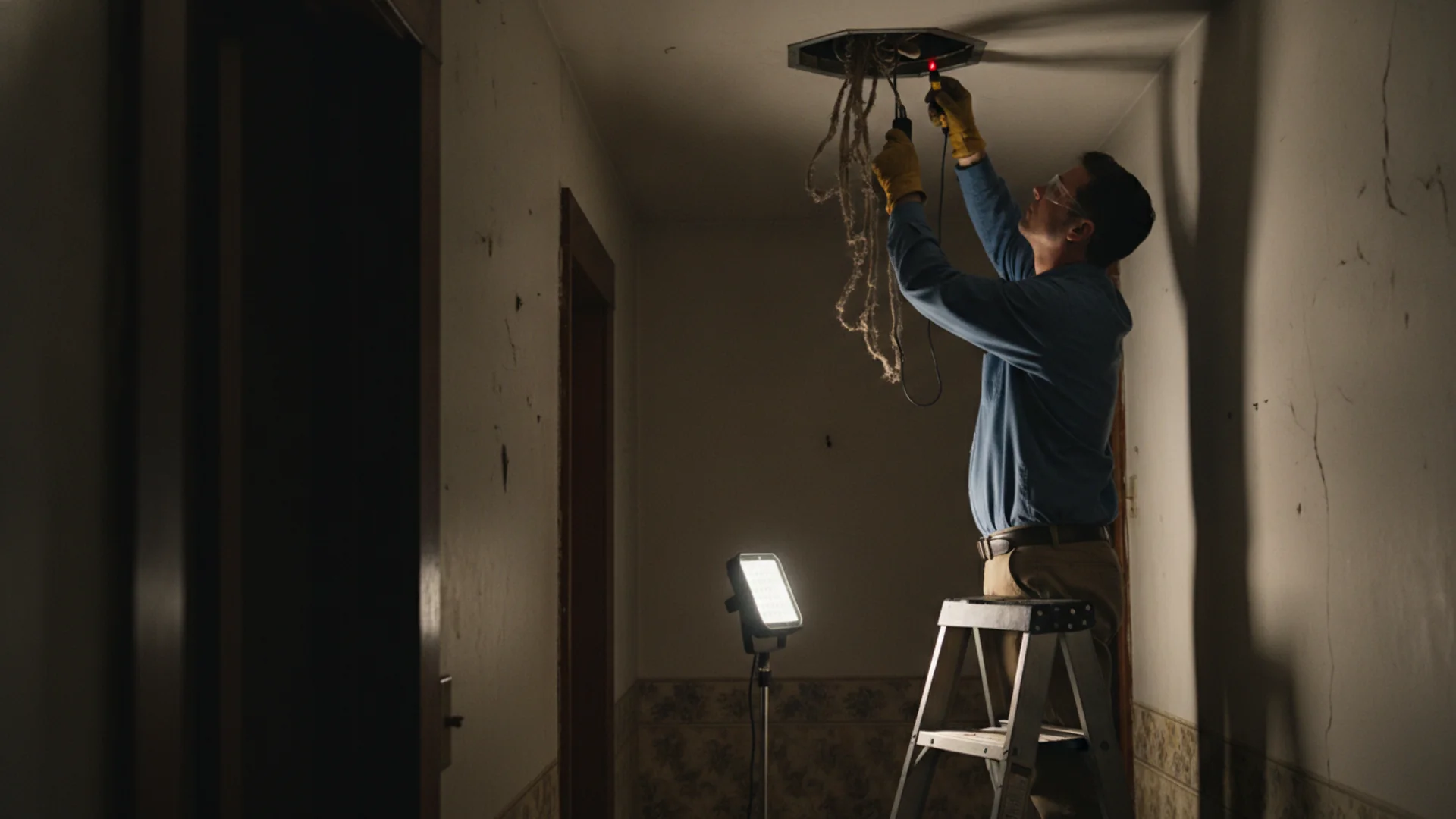
Electrician tracing a circuit with a voltage tester at an open junction box in the ceiling of an older Pennsylvania home

Repairs and troubleshooting

Electrical Repair and Troubleshooting in Pennsylvania

Dead circuits, flickering lights, buzzing, and problems you can't pin down. How electricians track down the cause, what repairs usually involve, and what they cost.

Get Connected With an Electrician

2 Have your ZIP code ready and call

Call About an Electrical Repair(717) 409-6059
  • Free referral, no obligation to hire
  • Routed to a participating independent electrician near you
  • Availability varies by ZIP code and time of day

Last updated: 2026-10-11

Pennsylvania Electricians is an independent contractor-referral service that connects Pennsylvania homeowners, landlords, and property managers with participating independent electricians. This page covers electrical repair and troubleshooting: the problems homeowners call about most, what usually causes them, how an electrician finds the fault, and what affects the price.

What electrical repair covers

Most residential repair calls are about something that stopped working or started acting strangely: a circuit with no power, lights that flicker, an outlet that's warm, a switch that buzzes, or part of the house going dark. The repair itself is often small, like a loose connection, a failed device, or a damaged cable. Finding it is the skilled part, and that's what you're paying an electrician for.

  • Outlets, switches, or fixtures with no power
  • Lights that flicker, dim, or brighten
  • Buzzing, crackling, or a hot smell at a device
  • Part of the house without power when nothing has tripped
  • Breakers that trip or fuses that blow (see circuit breaker repair)
  • Damage after a renovation, a nail through a cable, or a rodent problem
  • Problems a home inspector flagged

Electrical troubleshooting: how the cause gets found

Troubleshooting is the step between "something's wrong" and the repair. An electrician starts with what you've noticed, then tests: which outlets and lights are on the affected circuit, whether voltage is present and steady, whether a GFCI or AFCI device has tripped somewhere upstream, and where along the circuit the fault sits. In older Pennsylvania houses, circuits often wander through rooms in ways the panel labels don't match, so mapping the circuit is part of the job.

Some faults are intermittent, like a loose connection that only fails when the furnace starts or a space heater runs. Writing down when the problem happens (time of day, what was running, the weather) can save time. No one can diagnose an electrical problem from symptoms alone, and an electrician won't be able to promise a cause over the phone.

Common causes behind repair calls

These are the usual suspects. Which one applies takes testing to confirm:

  • Loose connections at outlets, switches, splices, or the panel. They cause flicker, heat, and intermittent power, and they're a common source of arcing.
  • "Backstabbed" outlets, where wires are pushed into the back of the receptacle instead of wrapped on the screws. The connection can loosen over time.
  • A tripped GFCI in another room, often a bathroom, garage, or basement outlet that also protects outlets downstream.
  • Failed devices. Outlets, switches, and dimmers wear out.
  • Overloaded circuits that were laid out for far less than they carry today.
  • Damaged cable from nails, screws, rodents, or past DIY work.
  • Problems at the service or panel, including a loose neutral, which can make lights brighten and dim across the house. That one needs attention quickly, and sometimes the utility.

Why older Pennsylvania houses need more troubleshooting

In Reading, 57 percent of homes were built before 1940; in Lancaster, 54 percent; in York, 49 percent (U.S. Census Bureau, ACS 2020–2024). Houses that old have usually been rewired in pieces: original knob-and-tube in one part, 1950s cloth-covered cable in another, modern cable where someone remodeled. Junction boxes get buried in plaster and splices get hidden in walls. That makes faults harder to trace and repairs slower, and it's why a repair visit sometimes turns into a conversation about rewiring.

When to call an electrician

  • A circuit stays dead after you've checked for a tripped breaker and pressed the reset button on any GFCI outlets
  • Lights flicker or dim in more than one room, or when large appliances start
  • An outlet, switch, or cover plate is warm, discolored, or buzzing
  • You get even a mild shock from a switch, outlet, or appliance
  • Part of the house has no power and nothing has tripped
  • There's a hot or burning smell. If there's smoke or sparking, leave and call 911 first

What electrical repair costs

Angi's 2026 data puts the average electrician job at $351, with most falling between $163 and $538. Hourly rates run $50 to $130, and most electricians charge a $100 to $200 service call or first hour. Emergency and after-hours visits often cost about double. Angi's Philadelphia figures run slightly higher, averaging $377. See the Pennsylvania electrician cost guide for more.

  • How long it takes to find the fault
  • Plaster or finished walls that have to be opened and patched
  • Whether the cause is one device or a damaged run of cable
  • Old wiring that has to be corrected before the repair can be finished
  • Permits for anything beyond a like-for-like repair
  • Night, weekend, or same-day timing
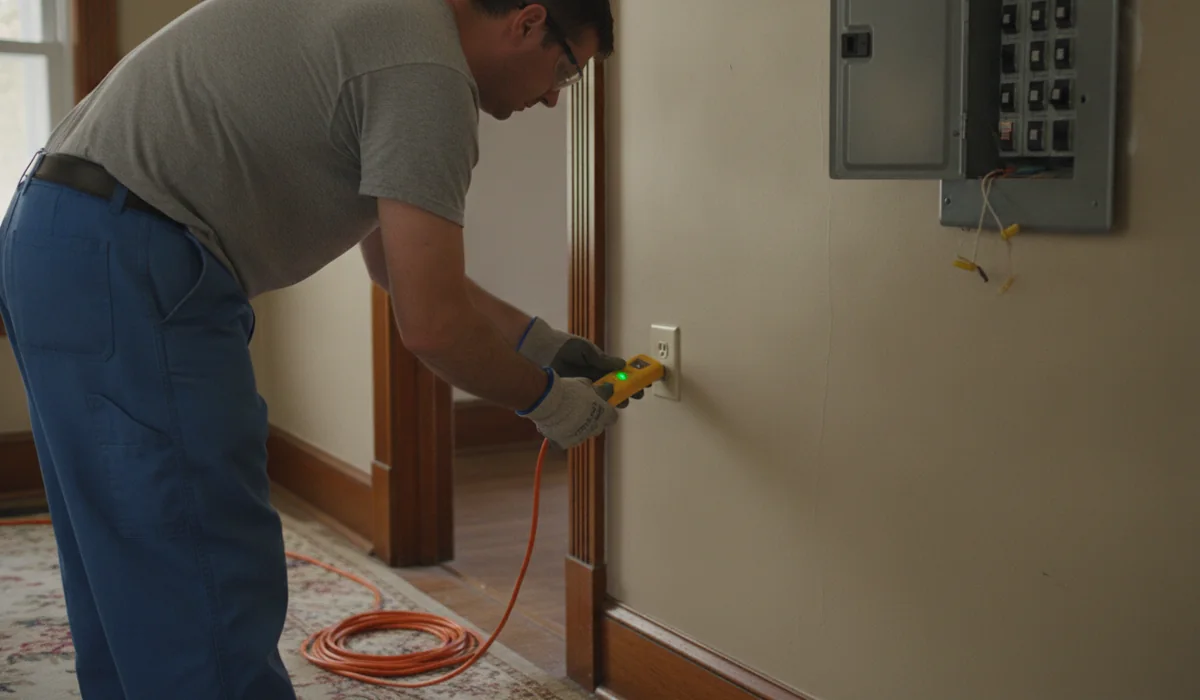
Electrician testing a wall outlet with a plug-in circuit tester in a plaster-walled Pennsylvania hallway

What you can safely do before the electrician arrives

  1. Check the obvious once. Look for a tripped breaker and press the reset button on any GFCI outlets. Reset a tripped breaker one time only.
  2. Unplug anything on the affected circuit, especially heaters and appliances.
  3. Stop using any outlet or switch that's warm, discolored, or buzzing.
  4. Write down what happens and when: what was running, which rooms are affected, any smell or sound.
  5. Don't open the panel or take covers off. Leave testing to the electrician.

Questions to ask an electrician about a repair

  • How do you charge: flat rate, hourly, or a service fee plus time?
  • If you find a bigger problem, will you stop and give me a price before going further?
  • Does this repair need a permit?
  • Pennsylvania has no statewide electrician license. Does my municipality require one for this work, and what's your license number if so? What's your PAHIC registration number?
  • Will you patch the openings, or should I plan for a plasterer or drywall finisher?

Related electrical guides

Straight answers

What you can safely do vs. when to call

The safe homeowner steps are short on purpose. Anything past them, including opening the panel cover, belongs to an electrician.

SituationSafe for you to doCall an electricianCall 911 or the utility first
A breaker tripped onceUnplug what was running, then switch the breaker fully off and back on one timeIt trips again, or won't stay onIt sparks, smokes, or smells hot
An outlet stopped workingLook for a tripped GFCI outlet nearby and press its reset button onceStill dead, or several outlets are outScorch marks with smoke or flame
Lights flicker or dimCheck that the bulb is snug and the right typeSeveral rooms flicker, or lights dim when appliances startFlicker with burning smell or buzzing at the panel
Warm or discolored outlet, switch, or cover plateStop using it and unplug anything plugged inAlways: heat means a bad connectionBurning smell, smoke, or melting
Panel is hot, buzzing, or cracklingStay back; keep the area clearRight awaySmoke, sparks, or a burning smell
Downed line, damaged meter, or water reached outlets or the panelStay away and keep others awayAfter the utility has made it safeAlways: call 911 and Met-Ed, PPL, or your utility

General guidance only, based on homeowner safety material from the Electrical Safety Foundation International. It is not a diagnosis. If something seems dangerous, treat it as dangerous.

What to expect

What an electrician visit usually involves

Every house and every problem is different. These are the stages most residential electrical jobs go through.

  1. You describe the problem

    What stopped working, when it started, whether a breaker trips or a fuse blows, any warmth, buzzing, flicker, or burning smell, and roughly how old the house and panel are. That helps the electrician come prepared, but no one can diagnose an electrical problem from symptoms alone.

  2. On-site diagnosis

    The electrician tests the affected circuits and devices, looks at the panel and the wiring they can reach, and works out whether the cause is one failed part, an overloaded circuit, a wiring fault, or something bigger.

  3. A written scope and price

    Before work starts, ask for the scope, price, and whether a permit is needed in writing. Under Pennsylvania's Home Improvement Consumer Protection Act, home improvement contracts over $500 must be in writing.

  4. The repair or upgrade

    Small repairs are often finished on the first visit. Panel replacements and service upgrades usually need a permit, a scheduled power shutoff, and coordination with the utility (Met-Ed, PPL, or your local utility) to disconnect and reconnect the meter.

  5. Inspection where required

    Work done under a permit is inspected under the Pennsylvania Uniform Construction Code, by the municipality's code office or a third-party inspection agency it uses. Keep the permit and inspection paperwork with your house records.

How the referral works

How our contractor-matching service works

  1. You call the number on this site

    Have the property's address or ZIP code ready, plus a short description: what isn't working, whether a breaker keeps tripping, and anything you've seen, heard, or smelled.

  2. Your call is routed to a participating electrician

    Your call is connected with a participating independent electrician or electrical contractor who serves your area, if one is available. We do not send anyone ourselves.

  3. You deal with that electrician directly

    The electrician diagnoses the problem, quotes the job, and does any work you agree to under their own business name, license where one is required, and insurance. You decide whether to hire them; there is no obligation.

Good to know: availability depends on which participating electricians cover your ZIP code, and not every electrician takes every kind of job. Pennsylvania has no statewide electrician license, so ask whether your municipality requires one, for their PA Home Improvement Contractor (PAHIC) registration number, proof of insurance, and a written price. Our hiring checklist covers what to ask.

Request Electrical Assistance

Call and we will try to connect you with a participating independent electrician who serves your area.

Questions

Electrical Repair questions

Why is one outlet dead when nothing has tripped?

Often a GFCI outlet somewhere else, such as a bathroom, garage, kitchen, or basement, has tripped and is cutting power to outlets downstream. Press the reset button on any GFCI outlets once. If the outlet is still dead, a loose connection or failed device is likely, and an electrician should find it.

How much does an electrician charge for a repair in Pennsylvania?

Angi's 2026 data puts the average electrician job at $351, with most between $163 and $538, plus a typical $100 to $200 service call. Its Philadelphia figures average $377. The time it takes to find the fault is usually the biggest variable.

Is flickering a sign of a dangerous problem?

Sometimes. One flickering bulb is usually the bulb or fixture. Flickering in several rooms, or lights that dim and brighten across the house, can mean a loose connection at the panel or service, which should be checked promptly.

Can an electrician diagnose the problem over the phone?

No. They can ask good questions and come prepared, but electrical faults have to be tested on site. Be cautious of anyone who guarantees a cause or a price without seeing it.

Is Pennsylvania Electricians the company that does the repair?

No. Pennsylvania Electricians is a referral service. Your call is connected with a participating independent electrician who diagnoses, quotes, and does the work under their own business.

Call (717) 409-6059 · Electrical Help