
Last updated: 2026-10-11
Pennsylvania Electricians is an independent contractor-referral service that connects Pennsylvania homeowners, landlords, and property managers with participating independent electricians. This page covers outlet repair and switch repair, including GFCI outlets: the common problems, what usually causes them, what code expects in kitchens and bathrooms, and what the work costs.
Common outlet and switch problems
- Dead outlets. Often a tripped GFCI elsewhere on the circuit, sometimes a loose connection or failed receptacle.
- Loose outlets that won't hold a plug. Worn contacts make poor connections and heat up.
- Warm, discolored, or melted outlets. A sign of a bad connection or overload. Stop using it.
- Two-prong outlets, meaning the circuit likely has no ground.
- Switches that buzz, spark when flipped, feel warm, or work only sometimes.
- Dimmers that hum or flicker, often from a dimmer that isn't rated for LED bulbs.
- Too few outlets, so extension cords and power strips run everywhere.
GFCI outlets: where they're needed
A GFCI (ground-fault circuit interrupter) shuts off power in a fraction of a second when current leaks to ground, such as through water or a person. The National Electrical Code calls for GFCI protection at kitchen counters, in bathrooms, garages, unfinished basements, laundry areas, outdoors, and near sinks, among other places. Older Pennsylvania homes often have few or none. Adding GFCI protection is one of the most cost-effective safety upgrades in an older house.
A GFCI outlet can protect other outlets downstream on the same circuit, which is why a dead bathroom outlet is sometimes fixed by pressing the reset button on a GFCI in another room. Test GFCIs monthly with the test button; if one won't reset or won't trip, it needs replacing.
Two-prong outlets: what the fix is (and isn't)
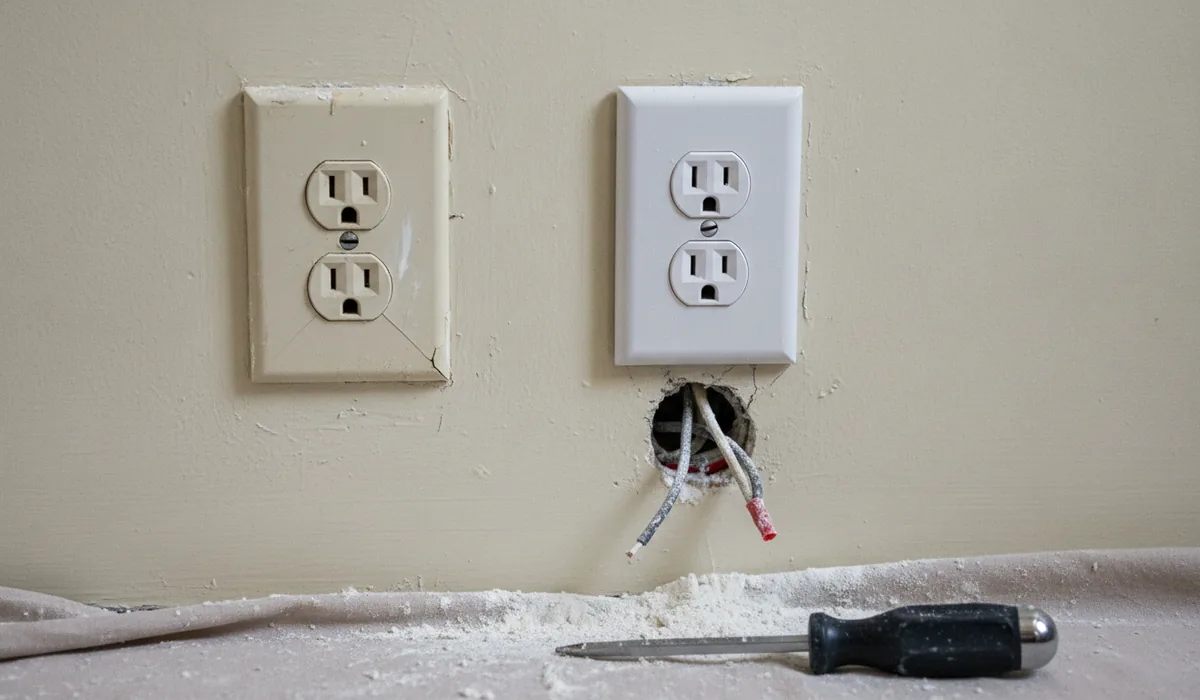
Putting a three-prong outlet on an ungrounded circuit, with nothing else done, makes it look grounded when it isn't. That's a code problem, not a fix. The legitimate options are running a ground or new circuit, or installing GFCI protection and labeling the outlets "No Equipment Ground," which the electrical code allows as a replacement method. An electrician can tell you which makes sense for your house, and two-prong outlets are often a sign it's time to look at the wiring itself.
When to call an electrician about outlets or switches
- An outlet stays dead after you've reset the GFCI outlets in the house
- An outlet or switch is warm, discolored, buzzing, or smells hot
- A switch sparks when you flip it
- Plugs fall out of an outlet
- You want GFCI protection in a kitchen, bathroom, basement, or outdoors
- You need more outlets, or you're replacing two-prong outlets
What outlet and switch repair costs
Angi's 2026 figures put installing an outlet at about $200 to $300, a light switch at $85 to $200, and an outdoor outlet at $150 to $260; its Philadelphia figures run about 8 percent higher. Replacing several outlets in one visit costs less per outlet than one at a time. Angi notes standard outlets typically last about 15 years and GFCI outlets 15 to 25. See the Pennsylvania cost guide.
- Number of outlets or switches
- GFCI, AFCI, tamper-resistant, or smart devices versus standard ones
- Whether the problem is the device or the wiring behind it
- Plaster walls and old boxes that need replacing
- Adding a new outlet versus replacing one
What you can safely check
- Press the reset button on GFCI outlets in bathrooms, the kitchen, garage, basement, and outdoors.
- Check for a tripped breaker and reset it once.
- Unplug and stop using any warm, discolored, or loose outlet.
- Don't remove cover plates or replace outlets on live circuits.
- Count the problem outlets so the electrician can do them in one visit.
Questions to ask about outlet work
- Is the problem the outlet, or the wiring behind it?
- Which outlets should have GFCI protection?
- What do you recommend for my two-prong outlets?
- Is the price per outlet, or for the visit?
- Pennsylvania has no statewide electrician license. Does my municipality require one for this work, and what's your license number if so? What's your PAHIC registration number?