
Learn
Why does my circuit breaker keep tripping?
The three reasons breakers trip (overload, short circuit, ground fault), why AFCI and GFCI breakers trip, what you can safely check, and when to call an electrician.
A breaker trips to stop its circuit from overheating. The usual causes are an overload (too much running on one circuit), a short circuit (a hot wire touching another conductor), or a ground fault (current leaking to ground). Unplug things and reset it once. If it trips again, leave it off and call an electrician.
Published 2026-10-11 · Updated 2026-10-11
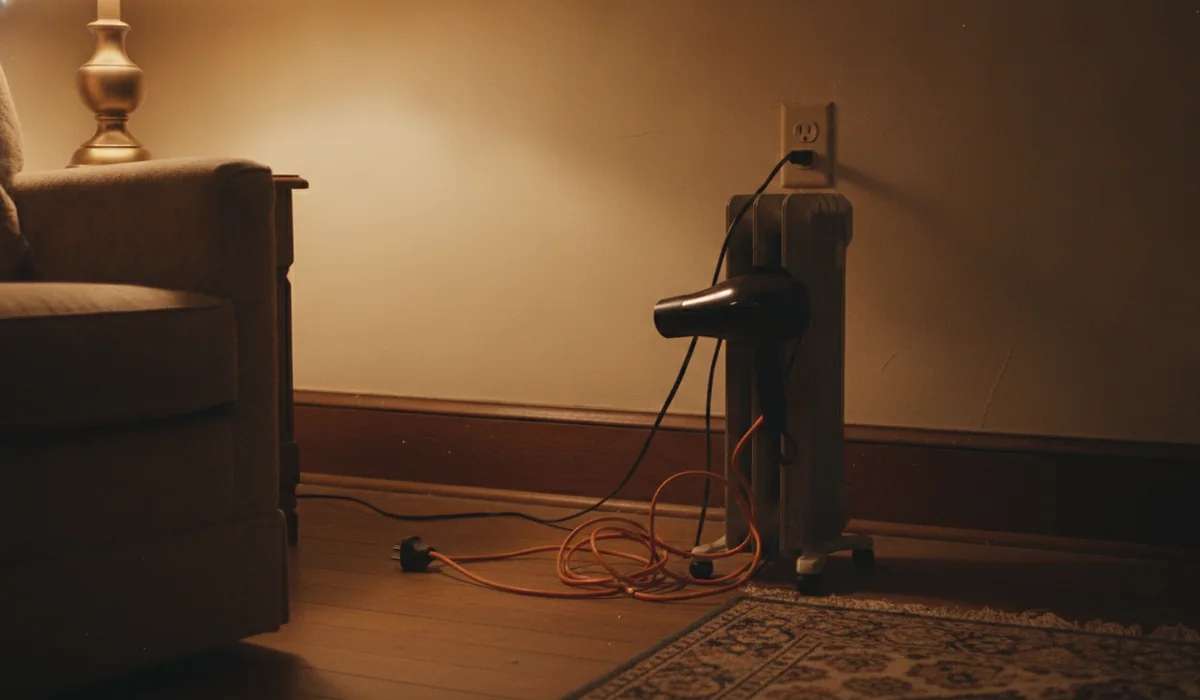
The three reasons breakers trip
Every breaker is sized to protect the wire on its circuit. When current goes above what that wire can safely carry, the breaker shuts it off. That happens for one of three reasons:
| Cause | What’s happening | How it usually behaves |
|---|---|---|
| Overload | More is running on the circuit than it’s rated for | Trips after a few seconds to a few minutes of heavy use, often when a heater, hair dryer, or microwave starts |
| Short circuit | A hot wire touches a neutral or another conductor | Trips instantly, sometimes with a pop, flash, or scorch mark |
| Ground fault | Current leaks to ground, often through water or damaged insulation | Trips GFCI breakers or outlets, often in kitchens, bathrooms, basements, or outdoors |
Overloads are the most common cause in older Pennsylvania homes. A house built before 1940, which describes about half the homes in York, Lancaster, and Reading (U.S. Census Bureau, ACS 2020–2024), was wired for a few lights and outlets per room. A space heater alone can draw most of a 15-amp circuit, so adding anything else pushes it over.
Short circuits point to damage: a crushed or chewed cord, a failed device, a loose wire touching a box, or a nail or screw through a cable. Don’t keep resetting a breaker that trips instantly.
Ground faults often involve water. They’re what GFCI protection is designed to catch, and a GFCI that trips is doing its job.
AFCI and GFCI breakers trip for more reasons
Newer panels often have AFCI (arc-fault) breakers, which detect the arcing that can start wiring fires, and GFCI breakers, which protect against shock. Both can trip on things a standard breaker ignores:
- A worn appliance or extension cord
- A loose connection at an outlet or switch
- Some motors, older vacuums, and power tools
- Moisture in an outdoor outlet or fixture
If a newer AFCI or GFCI breaker trips, try unplugging everything on the circuit and adding things back one at a time. If one device causes it, that device is the problem. If the breaker trips with nothing plugged in, the wiring needs an electrician. Don’t replace an AFCI or GFCI breaker with a standard one to stop the trips.
What you can safely check
- Unplug heaters and appliances on that circuit.
- Reset once: push the breaker fully to off, then back on. A tripped breaker often sits in a middle position.
- Spread the load: move a space heater or window air conditioner to a different circuit.
- If it trips again, leave it off. Write down what was running and how quickly it tripped.
That’s the full list. Don’t remove the panel cover, don’t replace breakers yourself, and never install a larger breaker or fuse. A 20-amp breaker on wire sized for 15 amps lets that wire overheat inside the wall before anything trips. In older houses with fuse boxes, oversized fuses are one of the most common unsafe “fixes” electricians find.
When it’s more than an overload
Call an electrician when:
- The breaker trips again after you’ve unplugged things and reset it once
- It trips instantly with nothing plugged in
- It won’t stay on, or won’t reset at all
- The breaker or panel is warm, buzzing, or smells burnt: treat that as urgent
- Several breakers trip, or lights dim when they do
- You smell burning at an outlet or switch on that circuit
If there’s smoke or sparking, leave the house and call 911.
What the fix usually is
The repair depends on the cause, which takes testing to confirm:
- Overload: move loads, or add a dedicated circuit for a heater, air conditioner, or kitchen appliance.
- Short or ground fault: find and repair the damaged cord, device, or cable.
- Failing breaker: replace it with the correct type and size. HomeAdvisor lists a single breaker replacement at about $100 to $200.
- Panel problems: a panel that’s full, outdated, or failing may need replacing. See signs your electrical panel may need an upgrade and circuit breaker repair.
The bottom line
If you need an electrician now, call (717) 409-6059 and we'll try to connect you with a participating independent electrician who serves your area. That electrician diagnoses the problem and quotes the job themselves. If anything is smoking, sparking, or smells like it's burning, leave and call 911 first.